

ADVERTISEMENT
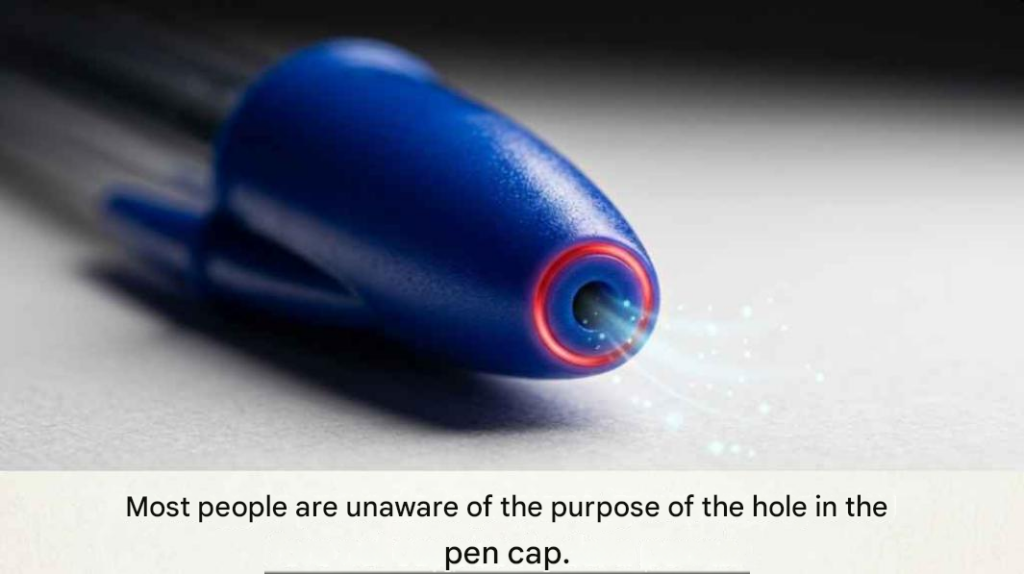
That tiny hole at the top of a pen cap is easy to overlook. It may seem like a decorative feature, a manufacturing shortcut, or part of the l purpose is much more important.
On many everyday pens and markers, the opening is a safety feature designed to reduce the risk of complete airway blockage if the cap is accidentally inhaled. This matters especially for children, who are more likely to place small objects in their mouths.
The hole cannot make a swallowed pen cap harmless, and it should never be considered a substitute for emergency help. Still, it is a thoughtful example of how a small design choice may reduce the danger of a common household object.
ADVERTISEMENT
The Quick Answer

Pen caps have holes mainly to allow some airflow if the cap becomes lodged in a person’s airway.
A hollow or ventilated cap may reduce the risk of complete asphyxiation by allowing a limited amount of air to pass through it. However, a cap stuck in the throat remains a serious choking emergency.
The hole in the cap usually does not control the pen’s ink flow. That function, when ventilation is required, is generally handled by parts inside the pen or by an opening in the barrel.
The Main Reason Is Safety
Pen caps are small enough to fit inside the mouth, and many have a smooth shape that can make them difficult to remove if inhaled.
Children may chew on a pen cap while completing homework, drawing, or sitting in class. An accident can happen quickly if the child suddenly laughs, coughs, falls, or takes a deep breath.
If a solid cap creates a tight seal in the airway, it can stop air from reaching the lungs. A ventilated cap is designed to reduce that risk by providing an opening through which some air may continue to move.
The opening does not guarantee normal breathing. Its purpose is to make a dangerous obstruction less likely to become completely airtight.
That difference may provide valuable time for an adult to recognize the problem, call emergency services, and begin appropriate first aid.
Why Pen Cap Design Is Regulated
The hole is not simply a trend copied by pen manufacturers. Safety standards address the design of caps used on writing and marking instruments.
These standards are especially relevant to products that children are likely to use. They may include requirements involving airflow, cap dimensions, ventilation, and warning labels.
A manufacturer may meet the safety goal in more than one way. Some caps have an obvious opening at the top, while others use side vents, internal air passages, or a shape that reduces the risk of a complete blockage.
This explains why the cap on one pen may have a large visible hole while another appears almost closed.
The important feature is not always the appearance of the hole. It is whether the overall design meets the relevant safety requirements for that type of product.
See more on the next page to continue reading →
ADVERTISEMENT
ADVERTISEMENT