
ADVERTISEMENT
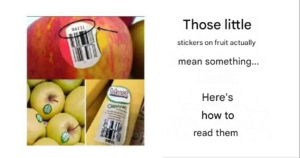
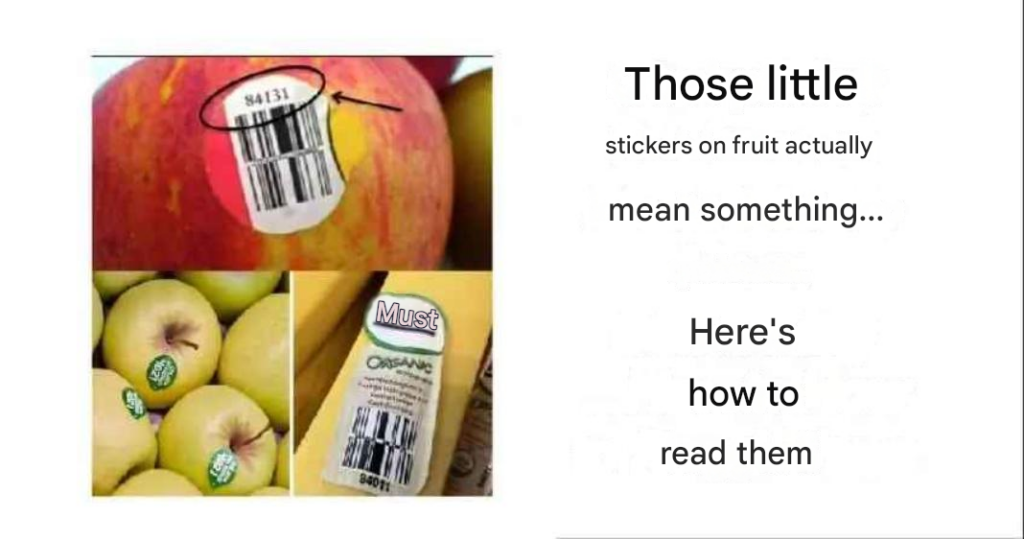
Those tiny stickers on apples, bananas, avocados, and other produce are easy to ignore. Most shoppers remove them without looking at the numbers, while grocery stores use them to identify products and charge the correct price.
The numbers are called Price Look-Up, or PLU, codes. They can help identify the type, variety, size, and growing method of certain fruits and vegetables.
However, several popular claims about fruit stickers are inaccurate. A code beginning with 9 can identify organic produce, but a code beginning with 8 is not a reliable sign that a fruit is genetically modified.
ADVERTISEMENT
Here is what the numbers actually mean.
What Is a PLU Code?
A PLU code is a four- or five-digit number used mainly on loose fruits, vegetables, herbs, and nuts.
Grocery stores use the code to distinguish between products that may look similar but have different prices.
For example, two apples may belong to different varieties or sizes. The cashier can enter the PLU number instead of trying to identify the exact variety by appearance.
PLU codes have been used by supermarkets since 1990 and are assigned internationally by the International Federation for Produce Standards.
The system is voluntary, however. It is not a government-required food-labeling program, and not every piece of produce will carry a sticker.
Four-Digit Codes
A standard four-digit PLU code identifies conventionally grown produce.
These codes generally fall within the 3000 and 4000 number ranges.
A four-digit code can help the store identify details such as:
- The type of produce
- The variety
- The size
- The growing method
- The correct price
The individual digits do not have separate hidden meanings. A code beginning with 3 is not automatically safer, less processed, or different in quality from one beginning with 4.
The numbers are assigned within available ranges rather than being designed as a nutritional rating system.
See more on the next page to continue reading →
ADVERTISEMENT