
Codes Beginning With 9
ADVERTISEMENT
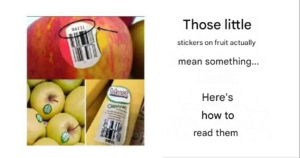
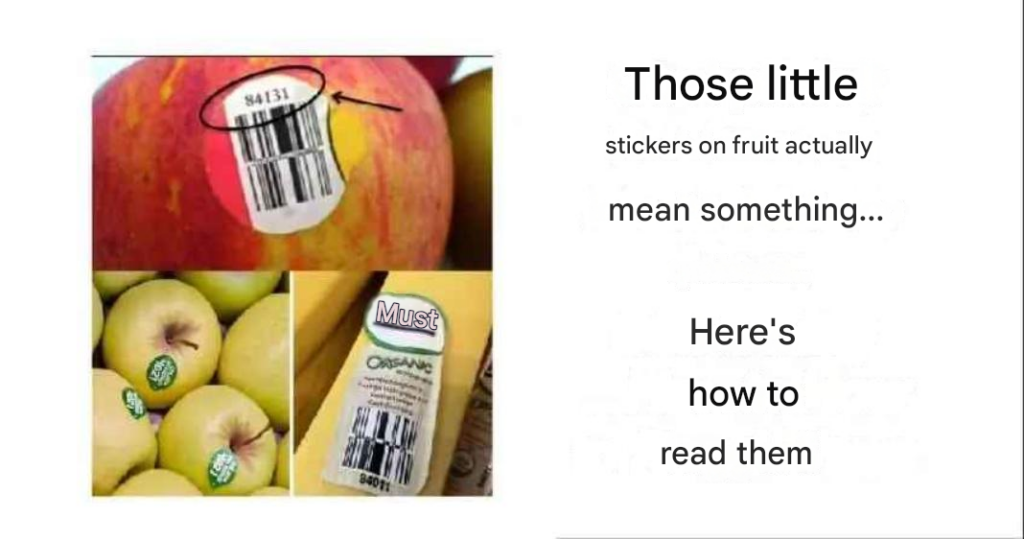
A five-digit PLU code beginning with 9 is used for organic produce.
The organic code is usually created by placing a 9 in front of the conventional four-digit code for the same product.
For example, if a particular variety has the conventional code 4011, its organic version may appear as 94011.
ADVERTISEMENT
In the United States, organic labeling is regulated separately under USDA organic standards. Organic products must meet production and certification requirements before they can be marketed as organic.
A 9-prefix PLU can therefore be a useful clue, but shoppers may also see the word “organic,” the USDA Organic seal, or store signage.
Does an 8 Mean GMO?
No. A five-digit fruit code beginning with 8 should not be used as a reliable method of identifying genetically modified or bioengineered produce.
Older explanations of the PLU system claimed that adding an 8 to a conventional code would indicate genetically modified produce. That idea was widely repeated online, but the system was not adopted consistently in stores.
Under the current IFPS system, number ranges beginning with 83000 and 84000 are intended to provide additional codes for conventionally grown produce when the existing ranges are exhausted.
This means a code beginning with 8 should not automatically be interpreted as GMO.
In the United States, bioengineered-food disclosures follow separate USDA rules. The PLU number alone is not the correct tool for determining whether a food is bioengineered.
What the Sticker Does Not Tell You
A PLU sticker is mainly a retail identification tool. It does not provide a complete history of the fruit.
The number alone does not reliably tell you:
- How much pesticide residue is present
- Whether pesticides were used on a specific item
- How nutritious the fruit is
- When it was harvested
- How fresh it is
- The name of the farm
- The country of origin
- Whether it is locally grown
- Whether it is bioengineered
- Whether it is better or safer than another product
Country-of-origin information may appear elsewhere on the sticker, package, box, or store sign, but it is not encoded in the basic PLU number.
Does Organic Mean Pesticide-Free?
Not necessarily.
Organic farming restricts many synthetic substances and prohibits certain production methods, including genetic engineering. However, organic growers may use substances that are allowed under organic standards.
A 9-prefix code should therefore be understood as an organic-production identifier, not a guarantee that the fruit has never come into contact with any pesticide.
Both conventional and organic produce should be handled and washed properly before eating.
Are Fruit Stickers Edible?
Produce stickers and their adhesives are designed for use on food, but the stickers are not intended to be eaten.
Remove the label before eating or cutting the fruit whenever possible.
Accidentally overlooking a tiny sticker is different from deliberately consuming one. The safest habit is simply to peel it off and discard it before preparing the produce.
Check carefully around stems and curved areas, where small stickers can be easy to miss.
How to Wash Fresh Produce
Remove the sticker and rinse the fruit or vegetable under clean running water.
Gently rub the surface with your hands. Firm produce, such as melons or cucumbers, can be scrubbed with a clean produce brush.
Do not wash fruits and vegetables with:
- Dish soap
- Bleach
- Household disinfectant
- Alcohol
- Laundry detergent
- Commercial cleaners not intended for food
Produce can absorb soap and detergent residues. Plain running water is the recommended option for routine cleaning.
Wash produce even when you do not plan to eat the peel. Dirt and germs on the outside can be transferred to the inside by a knife.
How to Shop More Carefully
See more on the next page to continue reading →
ADVERTISEMENT