
- The pillow seams
- Decorative cushions
- A beanbag or floor chair
- Stuffed animals
- The mattress cover
- A neck or travel pillow
- Packaging stored beneath the bed
- Recently purchased furniture
- Torn foam products
- Pet beds
ADVERTISEMENT
Move each item slowly. A damaged cushion may release more beads when lifted or pressed.
Also check whether the objects have collected under the bed because of airflow from a fan, air conditioner, open window, or vacuum cleaner.
The leak may not be located directly above the pile.
ADVERTISEMENT
How to Clean Up Foam Beads
Polystyrene beads can be frustrating to collect because static electricity causes them to cling to surfaces.
Try these steps:
- Turn off nearby fans first.
- Keep children and pets away from the area.
- Pick up large clusters with a slightly damp cloth.
- Use a dustpan for beads gathered on hard flooring.
- Vacuum slowly if the vacuum manufacturer permits it.
- Empty the vacuum carefully so the beads do not escape again.
- Place the beads in a sealed bag before disposal.
Avoid sweeping aggressively because this can send the beads across the room.
Do not allow children or pets to play with them. Small beads may create a choking risk or be swallowed.
After cleanup, repair the damaged seam securely or remove the leaking item from the room.
Could They Be Insect or Snail Eggs?
Most household insect eggs do not resemble large piles of dry, perfectly uniform foam spheres.
Some insects produce tiny pale eggs, but these are usually attached to a surface, arranged in clusters, hidden inside material, or much smaller than common beanbag beads.
Snail eggs can appear as groups of round, pale spheres, but they are typically soft or translucent and are laid in damp soil or moist protected locations. A dry pile beside a bed would be unusual.
If the objects feel wet, gelatinous, sticky, or connected by web-like material, avoid touching them directly and contact a pest professional.
When to Call a Professional
Professional help may be useful when:
- The objects appear to be natural eggs
- You regularly see geckos or other animals in the bedroom
- Droppings are present nearby
- The objects return after cleaning
- You cannot locate the source
- There is evidence of insects inside the mattress or furniture
- You are concerned about a possible infestation
Take clear close-up photographs, including one object beside a coin or ruler for scale. A wider image showing the location can also make identification easier.
Frequently Asked Questions
Are dozens of identical white balls likely to be lizard eggs?
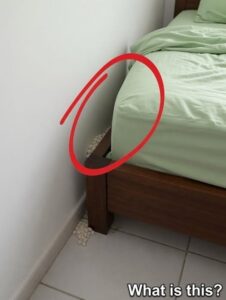
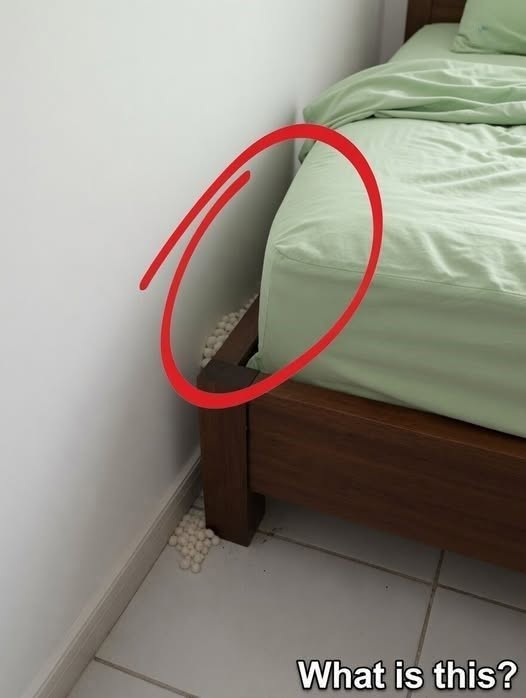
Usually not. Many house geckos lay one or two eggs at a time. Large numbers of identical loose spheres are more consistent with manufactured foam filling.
Why did the beads suddenly appear?
A seam may have opened, or airflow may have moved previously hidden beads from beneath furniture.
Are polystyrene beads dangerous?
They are not something people or pets should ingest. Keep them away from children and animals and clean them up promptly.
Can geckos lay eggs behind a bed?
Yes, geckos may choose hidden crevices indoors. However, their eggs are normally firm, natural-looking, and present in much smaller groups.
Should suspected lizard eggs be moved?
Avoid moving or breaking them. Photograph the area and ask a wildlife or pest professional for identification.
The Bottom Line
If you find many small, perfectly round white balls beside your bed, the most likely source is a leaking pillow, cushion, beanbag, stuffed item, or piece of packaging.
House-gecko eggs are possible in hidden indoor spaces, but they are usually laid in very small clutches and have a firm, natural shell rather than the uniform appearance of foam beads.
Inspect nearby fabric items carefully before assuming that the objects came from an animal. In most cases, the mystery can be solved by finding one tiny tear in a cushion or pillow.
ADVERTISEMENT