
ADVERTISEMENT
Some people with heart failure report greater comfort on the right side or avoid the left side because they feel their heartbeat more strongly. Others become short of breath when lying flat and need their upper body elevated.
There is not enough evidence to tell every person with heart failure to sleep on one particular side.
New or worsening breathlessness when lying down, waking suddenly unable to breathe, rapid weight gain, or increased swelling can indicate worsening heart failure and should be reported promptly.
ADVERTISEMENT
A sleeping position may improve comfort, but it does not treat the underlying condition.
Can a Tennis Ball Stop Back Sleeping?
A traditional positional-therapy technique involves attaching a tennis ball or another object to the back of a sleep shirt so that rolling onto the back becomes uncomfortable.
This can reduce back sleeping for some people, but it also has drawbacks. The discomfort may interrupt sleep, cause soreness, or simply lead the person to stop using it.
Newer positional devices use vibration or structured supports, but they are not appropriate for everyone.
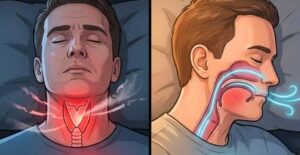
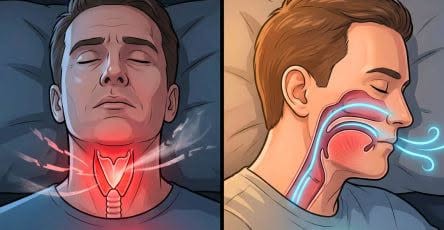
People with suspected sleep apnea should first discuss their symptoms with a healthcare professional. Continuous positive airway pressure, oral appliances, weight management, surgery, or other treatments may be more appropriate depending on the diagnosis.
Position Is Only Part of Healthy Sleep
Sleeping on the “right” side cannot compensate for very short sleep, untreated sleep apnea, a constantly changing schedule, or a bright and noisy bedroom.
Several habits have stronger support than dramatic claims about one position.
Aim for Enough Sleep
Most adults should aim for approximately seven to nine hours per night. Individual needs vary, but regularly feeling exhausted despite enough time in bed may signal poor sleep quality or an underlying disorder.
Keep a Steady Schedule
Try to keep bedtime and wake time reasonably consistent, including on weekends. Observational research has linked irregular sleep patterns with poorer cardiovascular outcomes.
There is no need to follow the clock perfectly. The goal is to avoid shifting the schedule by several hours whenever possible.
Reduce Light at Night
Bright nighttime light can disrupt circadian signals. Large observational studies have also found an association between greater nighttime light exposure and cardiovascular disease, although they cannot prove that bedroom light directly causes heart attacks.
Use blackout curtains or an eye mask when needed, dim the lights before bed, and avoid leaving a television shining throughout the night.
A dim, warm light is more practical than bright white or blue-toned light when nighttime visibility is necessary.
Get Daytime Light
Light is one of the strongest signals for the body clock. Getting outdoor light after waking can support alertness during the day and help keep sleep timing aligned at night.
The exact amount needed varies with weather, season, location, and individual sensitivity. A brief morning walk is a simple way to combine light exposure with physical activity.
Common Sleep Claims to Question
Online sleep advice often turns an association into a guarantee. Be cautious with claims such as:
- One sleep position prevents dementia
- Back sleeping causes heart attacks
- Sleeping on the left damages the heart
- Everyone needs exactly eight hours
- Eleven extra minutes of sleep cuts risk by a precise amount
- A short walk and one serving of vegetables reduce stroke risk by a guaranteed percentage
- Night owls have higher intelligence or a specific hormone profile
Some of these ideas may be inspired by real studies, but they remove important context.
Observational research can identify patterns without proving cause and effect, and results from one population may not apply to every individual.
Useful sleep advice should improve habits without creating fear.
A Simple Plan for Tonight
Start with changes that are easy to maintain:
- Choose the position in which you breathe comfortably and wake with the least pain.
- Try side sleeping if you snore, have positional apnea, are pregnant, or experience reflux.
- Use pillows to support the head, knees, abdomen, or lower back.
- Keep the bedroom dark, quiet, and comfortably cool.
- Set a realistic bedtime that allows seven to nine hours in bed.
- Keep your wake time fairly consistent.
- Seek medical advice for gasping, breathing pauses, severe snoring, persistent insomnia, or ongoing daytime exhaustion.
You do not need to remain frozen in one position. Healthy sleepers naturally change positions during the night.
See more on the next page to continue reading →
ADVERTISEMENT