Tapping the Burner
ADVERTISEMENT
Hitting or tapping burner parts may damage the cap, igniter, or alignment.
Cleaning While the Stove Is Hot
Hot parts can cause burns and may be damaged by sudden contact with water.
Reassembling Damp Parts
Water inside the burner can interfere with ignition.
ADVERTISEMENT
Using a Large Wire
A thick tool can permanently enlarge the ports.
Testing During a Suspected Leak
If gas is present, do not create a spark by turning the stove or any electrical device on.
Frequently Asked Questions
Can I use a paper clip?
Only use a tool specifically approved in the stove’s manual. A paper clip may be too thick and could enlarge the burner port.
Can I soak burner caps overnight?
Some manufacturers permit soaking removable parts, while others do not. Check the owner’s manual and dry everything thoroughly afterward.
Why does the burner keep clicking after cleaning?
Moisture, incorrect cap alignment, or debris around the igniter may cause repeated clicking. Let the parts dry and confirm that the cap is seated correctly.
Does cleaning a burner save gas?
Cleaning may restore normal performance when ports are blocked, but it does not guarantee lower gas bills. A continuing weak flame may indicate a service issue.
Should I clean the gas nozzle myself?
No. Routine cleaning should focus on removable caps, heads, and approved burner ports. Gas orifice work should be left to a qualified technician.
The Bottom Line
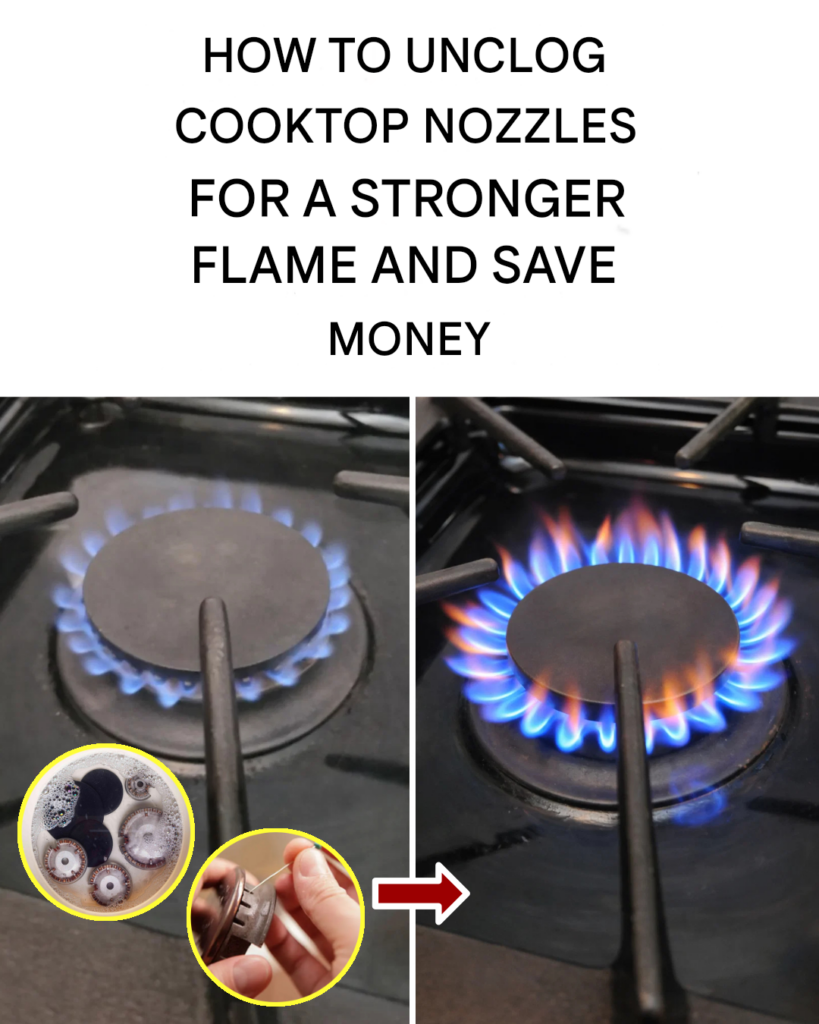
A clogged gas burner can sometimes be restored by cleaning the removable burner head and gently clearing its ports according to the appliance manual.
Do not insert taped wire or other tools into the gas orifice. Keep water away from the gas opening, dry all parts completely, and reassemble them in the correct position.
If the flame remains weak, uneven, delayed, or unusually colored, stop troubleshooting and arrange professional service.
ADVERTISEMENT