

ADVERTISEMENT
This is where gas still has a clear advantage.
Gas Stoves
- Can often be lit manually
- Still works during blackouts
- Useful in emergencies or storms
Electric Stoves
- Completely dependent on electricity
- Stops working during outages
🏆 Winner: Gas
🌬️ 4. Indoor Air Quality
This is one of the most overlooked differences.
ADVERTISEMENT
Gas Stoves
- Produce combustion byproducts like nitrogen dioxide
- Require proper ventilation
- Can impact indoor air quality in poorly ventilated kitchens
Electric Stoves
- Produce no indoor combustion gases
- Considered cleaner for indoor environments
- Safer for long-term air quality
🏆 Winner: Electric
🧼 5. Cleaning & Maintenance
Gas Stoves
- Burner grates require regular scrubbing
- Food can fall into tight spaces
- More parts to maintain
Electric Stoves
- Smooth glass surfaces
- Easy wipe-down cleaning
- Fewer removable parts
🏆 Winner: Electric
💰 6. Cost Considerations
This depends heavily on where you live.
Gas
- Often cheaper to run in areas with low gas prices
- Installation can be expensive if gas lines aren’t available
Electric
- Cheaper installation in most homes
- Running costs depend on electricity rates
🏆 Winner: Depends on location
🍰 7. Baking Performance
This is where things get interesting.
Electric Ovens
- More stable and even heat distribution
- Better for baking cakes, cookies, and pastries
- Less temperature fluctuation
Gas Ovens
- Slight humidity in cooking chamber
- Can create uneven heat in some models
🏆 Winner: Electric (for baking consistency)
🧠 Final Thoughts
There is no universal “best” option — only what fits your cooking style.
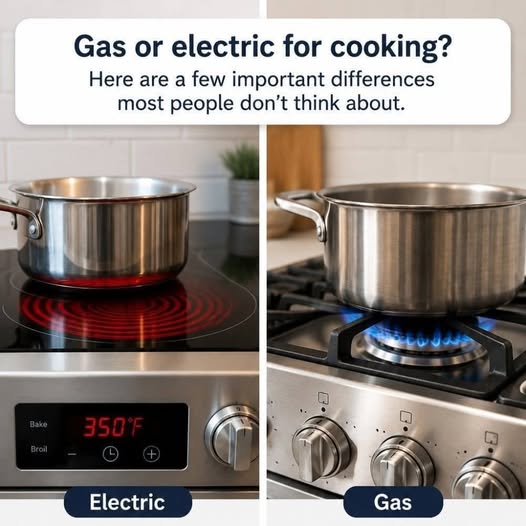
- Choose gas if you value speed, control, and power-outage reliability
- Choose electric if you want efficiency, cleaner air, and easier maintenance
In reality, many modern kitchens are now moving toward electric induction, which combines precision with efficiency.
ADVERTISEMENT