
ADVERTISEMENT
When choosing a stove, most people focus on one thing: “Which one cooks better?”
But the real answer is more complicated than that.
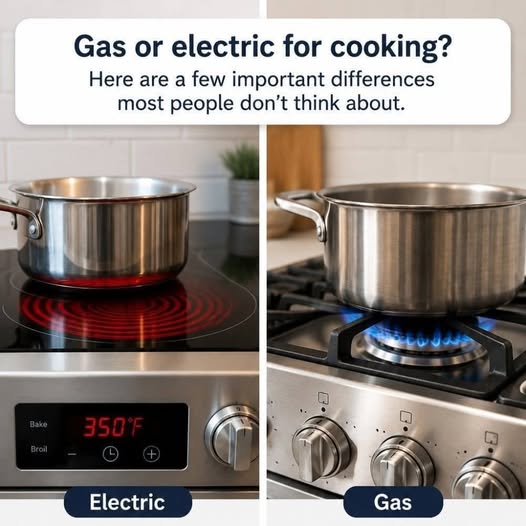
Gas and electric stoves don’t just differ in how they heat food — they affect your energy bills, kitchen safety, air quality, cleaning routine, and even how your food turns out.
ADVERTISEMENT
Here’s a breakdown of the differences most homeowners never fully consider.
🔥 1. Heat Control
🍳 Gas Stoves
Gas gives you instant flame control.
- Heat changes immediately when you turn the knob
- You can visually see the flame level
- Preferred by many professional chefs for precision
👉 This makes gas ideal for sautéing, stir-frying, and fast cooking.
⚡ Electric Stoves
Electric stoves behave differently:
- Slower to heat up and cool down
- Heat is more gradual and steady
- Smooth-top models distribute heat evenly
👉 This makes electric better for baking and simmering.
🏆 Winner: Gas (for speed & responsiveness)
⚡ 2. Energy Efficiency
This one surprises a lot of people.
Gas
- Some heat escapes around the pan
- Less energy is directly transferred into food
- Energy loss is higher than most expect
Electric
- Heat transfers more directly to cookware
- Newer models are highly efficient
- Less wasted energy overall
🏆 Winner: Electric
⚠️ 3. Power Outages
See more on the next page to continue reading →
ADVERTISEMENT