ADVERTISEMENT
Baking soda is one of the most versatile products found in the home.
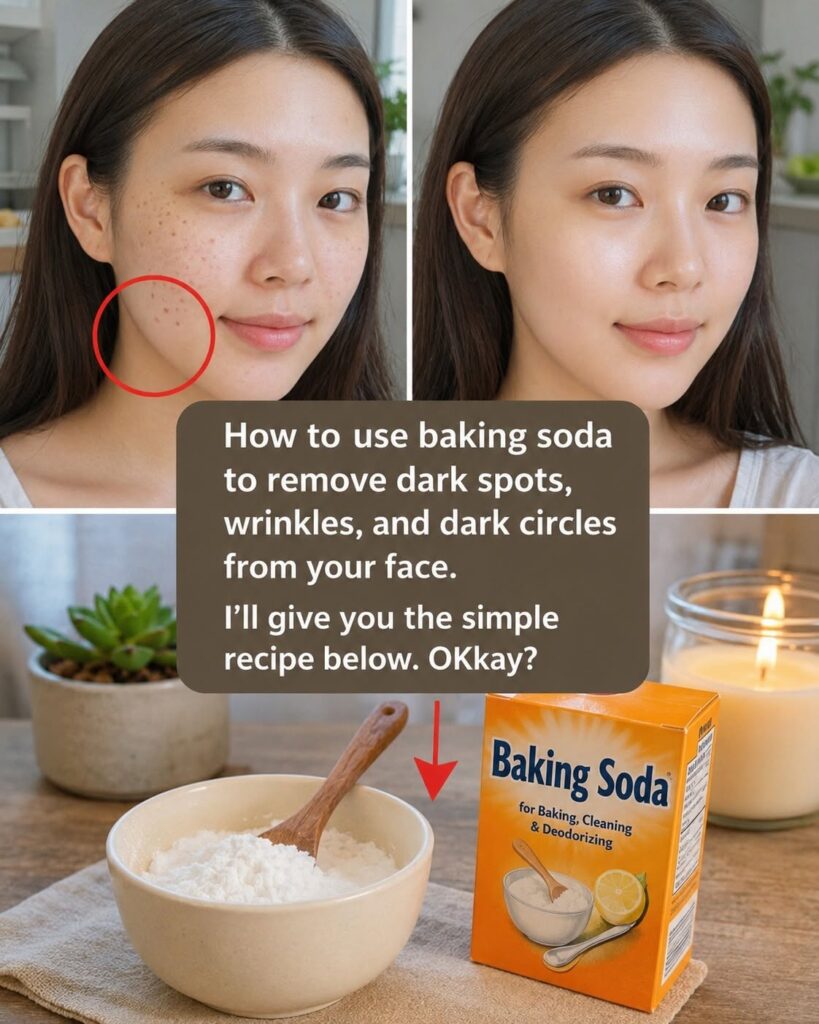
People use it for cleaning, deodorizing, cooking, and even various beauty routines. For years, social media posts and home remedies have promoted baking soda as a simple solution for everything from acne and oily skin to dark spots and exfoliation.
Because it is inexpensive and easy to find, many people assume it must be safe for regular skin care.
ADVERTISEMENT
However, skin experts often urge caution.
While baking soda may offer a few benefits in specific situations, using it incorrectly or too frequently may create problems that many people never expect.
Before applying it to your face or body, it is important to understand both the potential advantages and the possible risks.
Why People Use Baking Soda on Their Skin
Baking soda, also known as sodium bicarbonate, has mild abrasive properties.
This texture is one reason many people use it in homemade beauty treatments.
Supporters claim it may help:
- Remove dead skin cells
- Reduce excess oil
- Improve the appearance of rough skin
- Clean the skin’s surface
- Provide temporary exfoliation
Because the product is inexpensive and widely available, it has become a popular ingredient in do-it-yourself skin care recipes.
But popularity does not always mean safety.
The Problem Many People Overlook
Healthy skin has a natural protective barrier.
This barrier helps retain moisture and protects against bacteria, pollutants, and other environmental irritants.
One important part of this protection is the skin’s natural pH balance.
Baking soda is highly alkaline compared to healthy skin.
When applied repeatedly, it may disrupt the skin’s natural environment.
This can sometimes lead to:
- Dryness
- Irritation
- Redness
- Increased sensitivity
- Flaking
For some individuals, the effects may be mild. For others, especially those with sensitive skin, the irritation can be significant.
Can Baking Soda Help With Acne?
Many people turn to baking soda when dealing with acne.
The reasoning seems simple. Because baking soda can absorb some oil, people hope it will reduce breakouts.
Unfortunately, the reality is more complicated.
While baking soda may temporarily remove excess oil from the surface of the skin, it may also strip away natural oils that help maintain the skin barrier.
When this happens, the skin may respond by becoming irritated or producing even more oil.
For some people, this can actually worsen skin problems rather than improve them.
Acne is a complex condition influenced by hormones, bacteria, inflammation, and other factors. There is rarely a single ingredient that solves everything.
What About Exfoliation?
One of the most common uses for baking soda is exfoliation.
Exfoliation helps remove dead skin cells that accumulate on the surface of the skin.
Many people like the smooth feeling they notice immediately afterward.
However, there is a difference between gentle exfoliation and excessive exfoliation.
Using abrasive ingredients too frequently may cause:
- Tiny skin irritations
- Increased redness
- Dry patches
- Greater sensitivity to skin products
Individuals with sensitive skin may notice problems after only a few applications.
Who Should Be Especially Careful?
Certain people may be more likely to experience irritation from baking soda.
Extra caution may be necessary if you have:
- Sensitive skin
- Dry skin
- Rosacea
- Eczema
- Psoriasis
- Active acne inflammation
When the skin barrier is already compromised, harsh ingredients may make symptoms worse.
Warning Signs Your Skin Is Not Tolerating It
See more on the next page to continue reading →
ADVERTISEMENT