
ADVERTISEMENT
Gather these supplies before starting:
- A broom or vacuum
- Two buckets
- A microfiber mop
- A soft nylon grout brush or old toothbrush
- Measuring spoon
- Clean microfiber towels
- Gloves if your skin is sensitive
Using two buckets makes a noticeable difference. One holds the cleaning solution, while the other contains clean rinse water.
Step 1: Remove Dry Dirt
Sweep or vacuum the floor carefully before adding water.
ADVERTISEMENT
Pay attention to corners, edges, and the grout lines. Small grains of dirt can turn into muddy streaks when they become wet.
Dry cleaning first also reduces the number of times you need to rinse the mop.
Step 2: Mix the Floor Cleaner
Fill a bucket with approximately one gallon of warm water.
Add about one teaspoon of mild, clear dish soap and stir gently.
Avoid creating a bucket full of foam. More bubbles do not mean more cleaning power, and excess soap is one of the most common causes of streaky floors.
Do not add vinegar, bleach, ammonia, or hydrogen peroxide to the mixture.
Step 3: Mop in Small Sections
Dip the microfiber mop into the solution and wring it out thoroughly.
The mop should be damp rather than dripping wet.
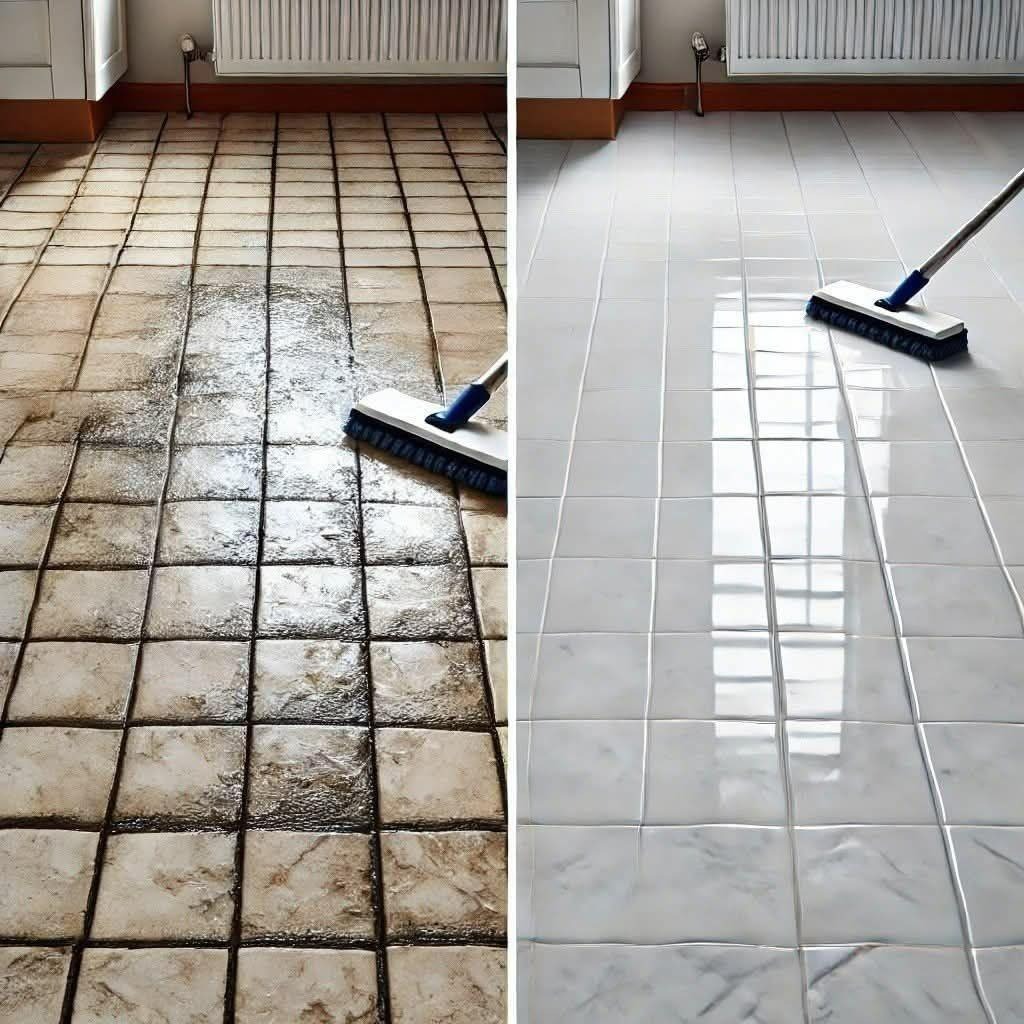
Clean the floor in small sections, working from the farthest corner toward the exit. Use overlapping passes so that dirt is lifted instead of pushed into the next area.
Rinse the mop frequently. If the cleaning water becomes gray or cloudy, replace it instead of continuing to spread dirty water across the floor.
Step 4: Rinse the Tile
After cleaning a section, go over it with a second mop or clean microfiber cloth dampened with plain water.
This step removes soap residue that can otherwise create streaks or a greasy-looking film.
Change the rinse water whenever it becomes dirty.
For a brighter finish, dry the floor with a clean microfiber towel rather than allowing large puddles to air-dry.
Step 5: Clean the Grout Separately
For grout that still looks dark, place a small amount of baking soda in a bowl.
Add just enough water to form a soft, spreadable paste.
Apply the paste directly to a small section of grout and leave it for approximately five minutes. Scrub gently with a soft nylon brush, then rinse the area thoroughly with clean water.
Avoid aggressive scrubbing. Hard metal brushes can damage grout and scratch tile.
Test the paste first if the grout is colored, sealed, old, cracked, or made from epoxy. Follow the grout manufacturer’s instructions when available.
Why You Should Skip Vinegar
To learn more, click the (Continue→) button below!
See more on the next page to continue reading →
ADVERTISEMENT