

- Clear
- Age-appropriate
- Consistent
- Explained calmly
ADVERTISEMENT
Consistency is often more important than strictness.
4. Encourage Effort, Not Just Results
Many parents naturally praise achievements. However, focusing solely on outcomes can create pressure and fear of failure.
Instead, praise:
ADVERTISEMENT
- Hard work
- Persistence
- Creativity
- Problem-solving
- Improvement
This approach helps children develop a growth mindset and resilience.
5. Be the Example You Want Them to Follow
Children are always watching.
If you want your child to be respectful, patient, honest, and kind, demonstrate those qualities in your own behavior.
Parents often underestimate how much children learn through observation.
Actions usually teach more effectively than lectures.
6. Create Daily One-on-One Time
Even 10 to 15 minutes of uninterrupted attention can strengthen your relationship with your child.
Use this time to:
- Read together
- Play games
- Talk about their day
- Take a walk
- Work on a shared activity
Consistent connection builds emotional security.
7. Teach Emotional Intelligence
Helping children understand emotions is one of the most valuable parenting tips available.
Encourage them to identify feelings such as:
- Happiness
- Frustration
- Sadness
- Excitement
- Anxiety
When children learn to name emotions, they become better equipped to manage them.
8. Allow Age-Appropriate Independence
Parents naturally want to protect their children, but independence helps build confidence.
Encourage children to:
- Solve simple problems
- Make choices
- Complete responsibilities
- Learn from mistakes
Small opportunities for independence prepare children for larger challenges later in life.
9. Avoid Comparing Your Child to Others
Every child develops at a different pace.
Comparisons can damage self-esteem and create unnecessary pressure.
Instead of focusing on how your child compares to others, focus on their personal growth and progress.
Celebrate individual strengths and achievements.
10. Remember That Perfection Isn’t Required
Many parents worry about making mistakes.
The truth is that children do not need perfect parents.
They need parents who:
- Show love consistently
- Apologize when necessary
- Keep learning
- Remain present and supportive
Healthy parenting is about progress, not perfection.
Common Parenting Mistakes to Avoid
While every family is different, some common mistakes include:
- Inconsistent discipline
- Over-scheduling children
- Solving every problem for them
- Ignoring emotional needs
- Expecting perfection
Recognizing these patterns can help create a healthier family environment.
Building Strong Family Relationships
Strong families often share certain habits:
- Open communication
- Regular family meals
- Quality time together
- Mutual respect
- Emotional support
These habits help children feel secure and connected.
The Bottom Line
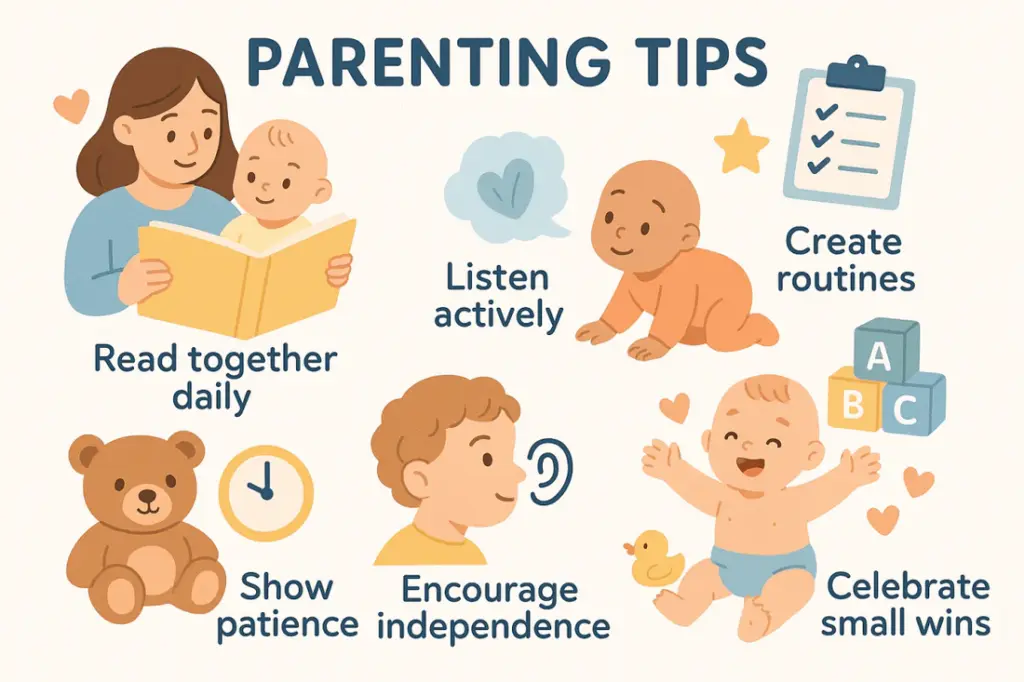
The best parenting tips are often the simplest ones. Listening, staying consistent, encouraging effort, and building strong emotional connections can have a lasting impact on your child’s development. Parenting is not about being perfect—it’s about showing up every day with patience, love, and a willingness to learn alongside your child.
Small actions repeated consistently can shape a child’s future in powerful ways. And in the end, those everyday moments often matter most.
ADVERTISEMENT