

ADVERTISEMENT
At first glance, it looks like a simple design choice.
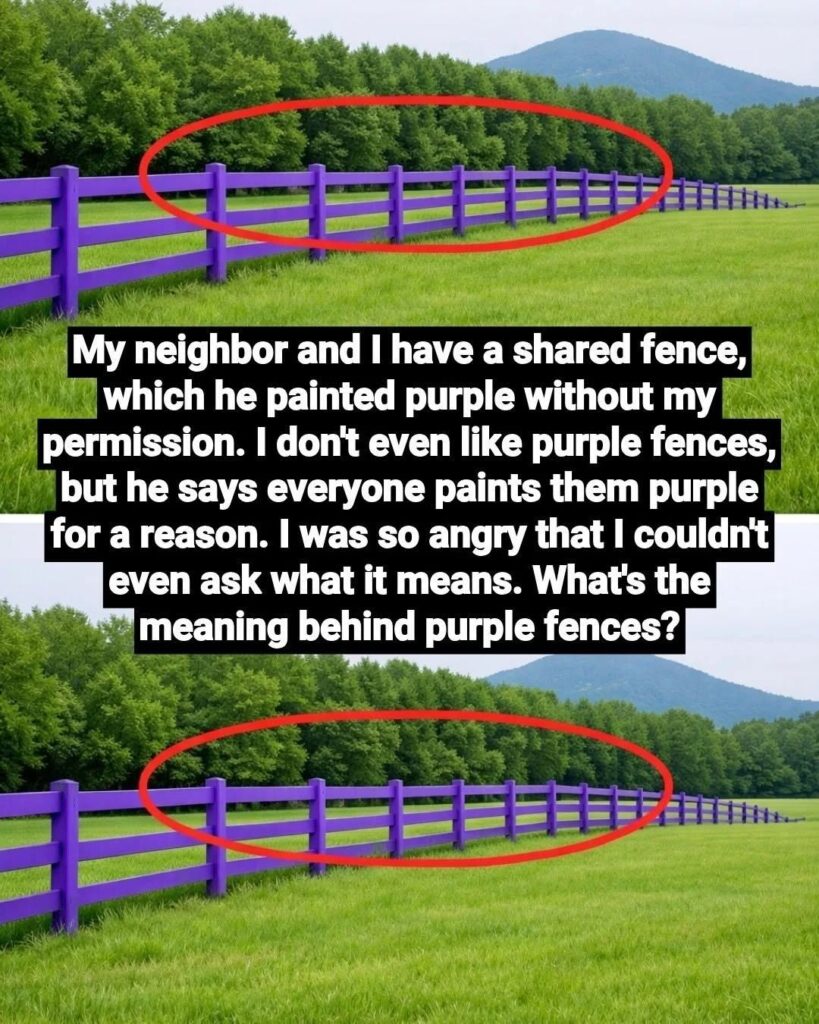
A long fence painted bright purple stretching across a field, a forest edge, or even a residential property.
Most people assume it’s purely decorative.
ADVERTISEMENT
Others think the owner simply likes the color.
But what if that purple paint is actually sending a message?
A message that could have legal consequences if ignored.
Over the last few years, photos of purple fences have gone viral across social media. Thousands of people have shared images asking the same question:
“Why would anyone paint a fence purple?”
The answers range from the bizarre to the ridiculous.
Some claim it represents wealth.
Others insist it’s connected to farming traditions.
A few even believe it’s some kind of secret signal used by local communities.
The truth is far more interesting.
And once you learn what purple fences can actually mean, you’ll never look at them the same way again.
The Mystery That Confuses Millions
Imagine driving through the countryside.
You pass a large property surrounded by trees.
Everything appears normal until you notice something unusual.
Several fence posts have been painted bright purple.
Or perhaps an entire section of fencing is covered in purple paint.
Why purple?
Why not red?
Why not yellow?
Why such a specific color?
The answer begins with a surprisingly practical problem.
For decades, property owners faced the same challenge.
They wanted a clear way to tell strangers:
“Do not enter this property.”
The traditional solution was simple.
Post signs.
Unfortunately, signs create problems.
They can blow away.
They can fade.
They can be stolen.
They can become hidden by vegetation.
And in remote rural areas, maintaining signs along miles of property boundaries can become expensive and time-consuming.
Landowners needed something better.
Something that couldn’t easily disappear.
That’s when purple entered the picture.
The Purple Paint Law
In several U.S. states, purple paint carries a special meaning.
Instead of placing “No Trespassing” signs everywhere, property owners can legally mark trees, fence posts, or boundaries with purple paint.
Those purple marks serve as a warning.
They tell people that the land beyond belongs to someone else and should not be entered without permission.
In many areas, the law recognizes these markings in the same way it recognizes posted signs.
That means ignoring them may carry legal consequences.
To someone unfamiliar with the system, a purple stripe may look harmless.
To local hunters, hikers, and outdoor enthusiasts, however, it often means one thing:
Stay out.
Why Purple Was Chosen
See more on the next page to continue reading →
ADVERTISEMENT