
ADVERTISEMENT
Many people love the idea of cleaning hardwood with vinegar.
Unfortunately, flooring professionals often disagree.
Over time, vinegar can weaken certain protective finishes, leaving wood more vulnerable to dullness and wear.
ADVERTISEMENT
The scary part?
The floor may look fine for months.
Then suddenly the finish begins losing its original appearance.
Use This Instead
Choose:
- Hardwood floor cleaners
- Damp microfiber mops
- Manufacturer-approved products
When it comes to wood, gentler is usually better.
3. Electronic Screens
Phones.
Tablets.
Laptops.
Televisions.
These devices often contain protective coatings designed to reduce glare and fingerprints.
Vinegar may gradually wear down those coatings.
Once they’re damaged, there’s no simple way to restore them.
Use This Instead
A microfiber cloth slightly dampened with water is often all you need.
For stubborn smudges, use cleaners specifically designed for electronics.
4. Rubber Seals And Gaskets
Take a look around your home.
Dishwashers.
Washing machines.
Refrigerators.
Many appliances rely on rubber seals to keep moisture where it belongs.
Repeated exposure to acidic cleaners can contribute to deterioration over time.
Tiny cracks.
Loss of flexibility.
Premature wear.
And suddenly a small cleaning habit becomes an expensive repair.
Use This Instead
Mild soap and warm water usually work perfectly.
Sometimes the simplest solution really is the best one.
5. Cast Iron Cookware
Cast iron lovers are passionate for a reason.
A properly seasoned pan can last generations.
But vinegar and cast iron aren’t always friends.
Too much acidity can strip away seasoning and encourage rust formation.
And rebuilding seasoning takes time.
Use This Instead
For routine cleaning:
- Hot water
- A brush or scraper
- A light coat of oil afterward
That’s often all cast iron needs.
Why People Keep Making This Mistake
Here’s the interesting part.
Most cleaning mistakes don’t happen because people are careless.
They happen because people are trying to be efficient.
The human brain loves universal solutions.
One cleaner.
One method.
One answer.
It’s easier than remembering different products for different surfaces.
Unfortunately, homes don’t work that way.
Different materials require different care.
And treating everything the same can create problems.
The Cleaning Rule Professionals Follow
Instead of asking:
“What cleaner should I use?”
Professionals often ask:
“What material am I cleaning?”
That tiny shift changes everything.
Because the safest cleaner for glass may be harmful for stone.
And the best cleaner for tile may damage wood.
The surface always comes first.
The Bottom Line
Vinegar can be an excellent cleaning tool.
But it isn’t a miracle cleaner.
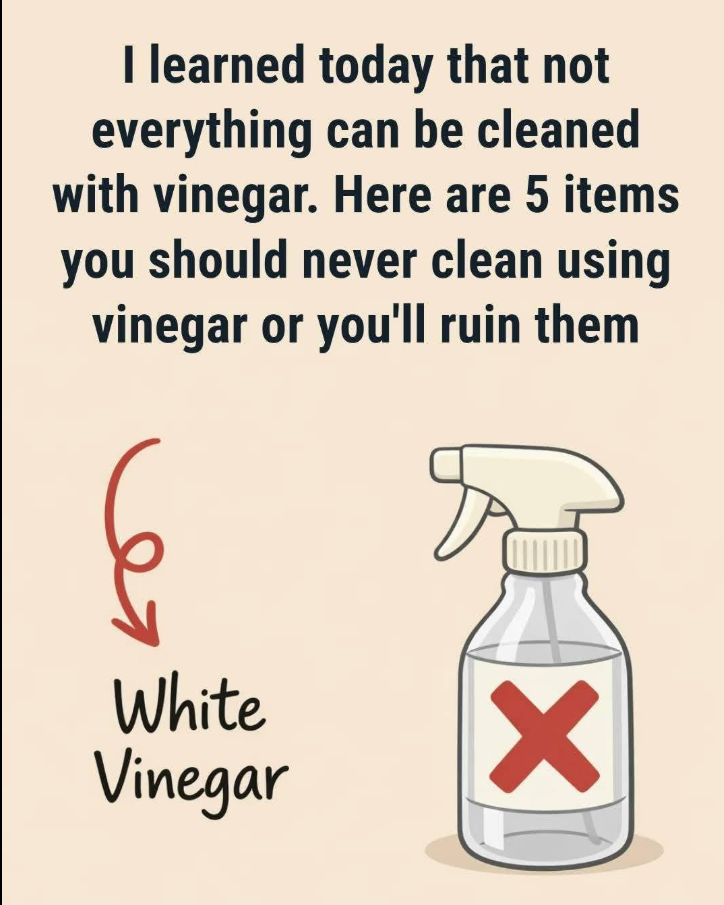
Using it on natural stone, hardwood floors, electronic screens, rubber seals, and cast iron cookware can lead to damage that may be difficult—or impossible—to reverse.
The next time you’re about to reach for that bottle of vinegar, pause for a moment and ask yourself a simple question:
Is this one of the places vinegar should never go?
That five-second decision could save you hundreds—or even thousands—of dollars in repairs.
ADVERTISEMENT